The Bare Bones On Pork Broth The quick answer
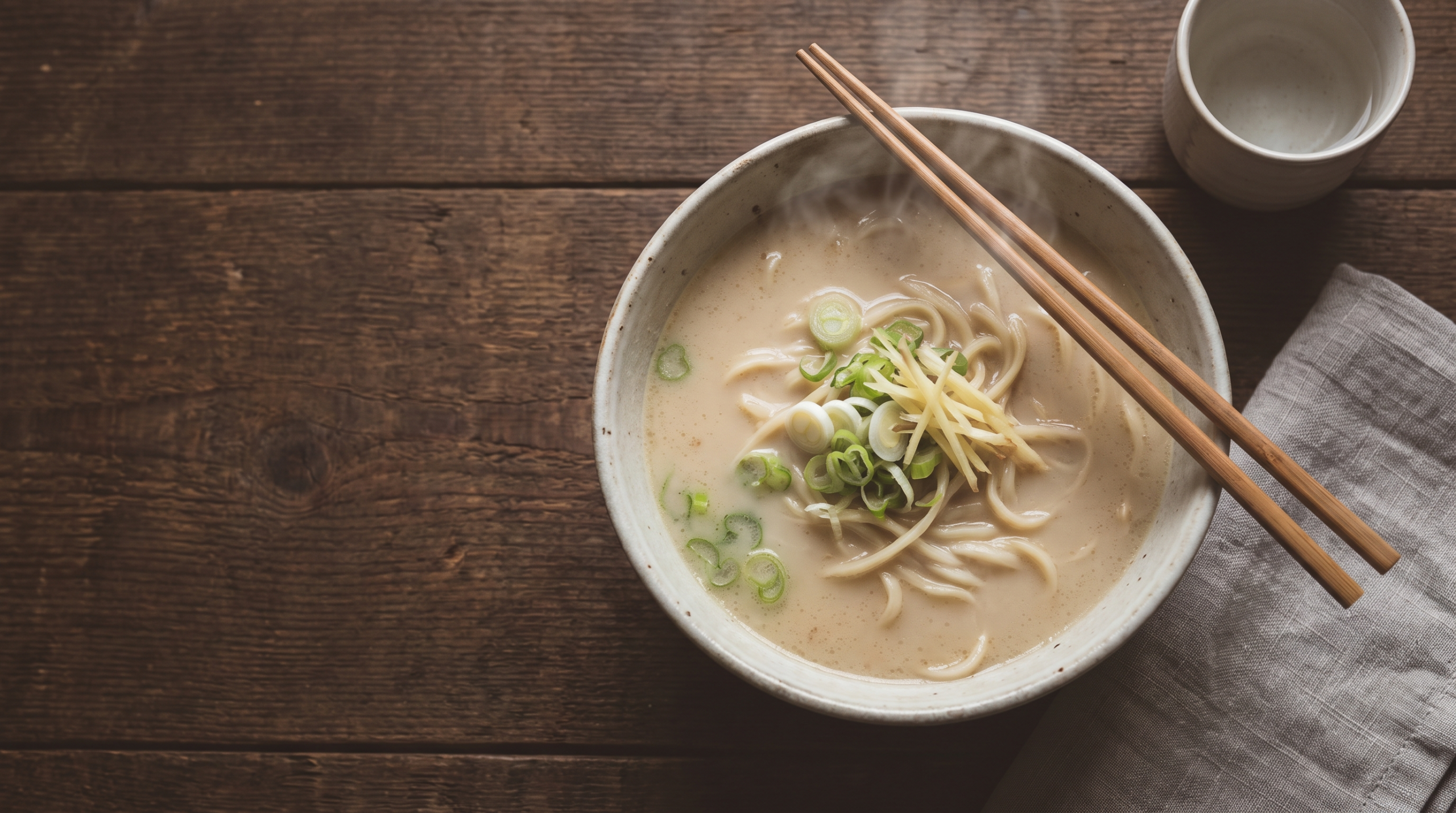
Pork bone broth is mild, silky, and unctuous, the base behind many Asian noodle soups, most famously the rich, milky tonkotsu. Trotters and neck bones give it plenty of collagen and body, and it adds silkiness to braises.
- Mild and silky, the backbone of ramen and many Asian soups.
- Rich in collagen, especially from trotters, so it gels well.
- Two styles: clear and delicate, or milky, rich tonkotsu.
- Blanching the bones first keeps the broth clean and clear.
- A source of protein and minerals like other bone broths.
Pork bone broth is the silky base behind a great bowl of ramen, and a quiet workhorse in the kitchen. It is mild, rich, and loaded with the connective tissue that gives a broth real body. Here is what it offers, the two classic styles, and how to make each.
Why Pork Bone Broth Is So Silky
Pork trotters, neck bones, and femurs are dense with connective tissue, so they release plenty of collagen that becomes gelatin. That is what gives pork broth its silky, mouth-coating body and lets it set into a gel. Trotters in particular are prized for exactly this reason.
Clear vs. Tonkotsu Style
Pork broth comes in two classic styles. A gentle simmer yields a clear, delicate broth. A hard, rolling boil emulsifies the fat and collagen into the water to create the milky, intensely rich tonkotsu style behind many ramen bowls. Same bones, different heat, very different result.
Pork Bone Broth Benefits and Nutrition
Like every bone broth, pork broth is a low-calorie source of collagen, protein, and minerals, and its benefits are broadly the same as other types (see our full guide to bone broth benefits). On the collagen claims specifically, the honest experts keep expectations grounded.
“There’s no downside to ingesting collagen, but there’s also no clear benefit.”
Dr. Denise Millstine, integrative medicine, Mayo Clinic
As always, the exact amounts vary with the bones and the cook, and an independent analysis is a reminder to treat it as nourishing food rather than a precise supplement.
How to Make Pork Bone Broth
Neck bones, trotters, and femurs all work well. Many cooks blanch the bones first, boiling them briefly and rinsing, to keep the final broth clean and clear. After blanching, cover the bones with fresh cold water and simmer gently for eight to twelve hours for a clear broth, or boil harder for tonkotsu. Finish with ginger, garlic, and scallion for a broth that tastes like a restaurant bowl at home. For storage, see how to use bone broth.
A Note on Safety
Pork bone broth is a safe everyday food for most people. Watch the sodium in store-bought versions, and if you are pregnant, nursing, feeding a baby, or managing a health condition, check with a professional first. This page is information, not medical advice.
Frequently Asked Questions
Why do you blanch pork bones first?
Blanching, a quick boil and rinse, removes impurities that can cloud the broth. It is an extra step, but it gives pork bone broth a cleaner taste and color.
What is tonkotsu broth?
Tonkotsu is a rich, milky pork bone broth made by boiling the bones hard so the collagen and fat emulsify into the liquid. It is the prized base of many ramen bowls.
Does pork bone broth gel?
Yes, and it gels well. Trotters and neck bones are rich in collagen, which sets the broth into a soft gel when chilled.
Is pork bone broth good for you?
It is a nourishing, low-calorie source of protein and collagen, like other bone broths. Choose lower-sodium options for daily use.
Can I use pork bone broth for ramen?
Absolutely, it is the classic choice. Simmer gently for a clear broth, or boil hard for the milky tonkotsu style.
Sources & References
Independent, third-party sources. No brand-funded or competitor-commissioned studies are cited as evidence; where cited research was industry-funded, that is noted in the text.
[1] Rahimi N, Launico MV. “Biochemistry, Collagen Synthesis.” StatPearls, NCBI Bookshelf, U.S. National Institutes of Health. www.ncbi.nlm.nih.gov/books/NBK507709/
[2] “Is bone broth good for you? Experts explain” (Dr. Denise Millstine, Mayo Clinic). TODAY. www.today.com/health/diet-fitness/is-bone-broth-good-for-you-rcna134088
[3] Alcock RD, Shaw GC, Burke LM. “Bone Broth Unlikely to Provide Reliable Concentrations of Collagen Precursors.” Int. J. Sport Nutrition & Exercise Metabolism, 2019. doi.org/10.1123/ijsnem.2018-0139
[4] “Bone Broth: Benefits, How To Make and Nutrition.” Cleveland Clinic. health.clevelandclinic.org/bone-broth-benefits