
Quick answer
- In the fridge, homemade bone broth keeps about 4 to 5 days in a sealed container.
- In the freezer, it lasts roughly 3 to 6 months with little loss of quality.
- Opened store-bought broth follows a similar fridge window; unopened shelf-stable cartons last much longer.
- If it smells sour, looks off, or fizzes, throw it out.
Bone broth takes time and care to make, so it is worth storing well. The good news is that it keeps nicely, both in the fridge for the short term and in the freezer for the long haul. Knowing the timelines, and the signs that a batch has turned, means you can make a big pot with confidence and never waste it.
Below are the practical numbers, plus how to tell good broth from bad and how to store it so it stays at its best.
The quick answer
| Where | How long |
| Fridge | About 4 to 5 days, sealed |
| Freezer | About 3 to 6 months |
| Room temperature | Do not leave out more than about 2 hours |
| Unopened shelf-stable carton | Months, up to the printed date |
In the fridge
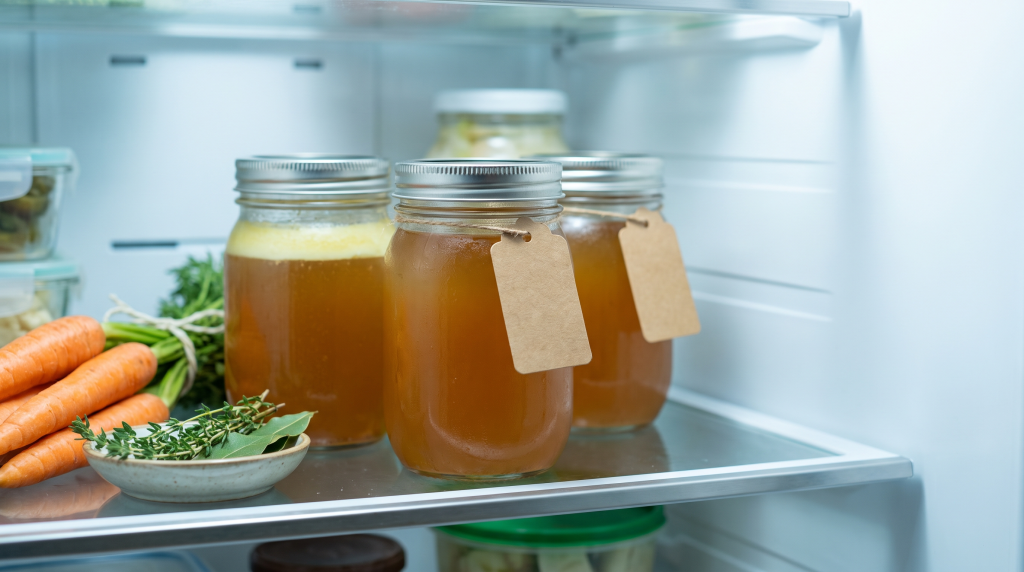
Stored in an airtight container, homemade bone broth lasts roughly four to five days in the fridge. To get the full window, cool it quickly after cooking and refrigerate it promptly rather than letting it sit out.
A layer of fat that sets on top can act as a natural seal, slowing spoilage, which is why some people leave it in place until they are ready to use the broth. Once you break that seal and start dipping into the container, aim to finish it within those few days.
In the freezer
For anything beyond a few days, freeze it. Bone broth freezes very well and keeps for several months with little change in flavor or quality. The smartest approach is to freeze it in portions: single-cup containers for sipping, or ice-cube trays for adding a splash to a dish.
Portioning means you only thaw what you need, so you are never stuck reheating a whole batch for one cup. Leave a little headroom in each container, since liquid expands as it freezes, and label everything with the date so you can rotate through your stash.
Store-bought vs. homemade
Store-bought bone broth follows slightly different rules depending on its packaging. Unopened shelf-stable cartons and cans last for many months, right up to the printed date, because they are sealed and heat-treated. Once you open one, though, treat it just like homemade and use it within the fridge window noted on the label, usually a handful of days.
Frozen store-bought broth keeps on the same long timeline as homemade. Refrigerated fresh broths from the chilled aisle have the shortest life and should be used by their date or frozen if you are not going to get to them in time.
How to tell if bone broth has gone bad
- Smell. A sour, sharp, or off odor is the clearest sign to toss it. Fresh bone broth smells savory and clean.
- Appearance. Cloudiness beyond the usual, a slimy texture, discoloration, or any mold means it is done.
- Fizz or bubbles. Any fizzing or carbonation suggests fermentation from bacteria, a sure sign to discard it.
- When in doubt, throw it out. Broth is not worth the risk of a foodborne illness, so if anything seems off, do not taste it to check; bin it.
Thawing and reheating
Thaw frozen bone broth in the fridge overnight, or gently in a pot over low heat if you need it sooner. Once thawed, use it within a few days and avoid refreezing a batch you have already thawed, since repeated freezing and thawing dulls the flavor and is harder on food safety. Reheat only what you plan to drink rather than warming the whole container each time.
Why bone broth spoils
Bone broth spoils for the same reason any cooked food does: bacteria gradually multiply, especially in a moist, protein-rich liquid kept at warm temperatures. The gelatin and amino acids that make bone broth nourishing also make it a hospitable place for microbes once it sits out. That is why prompt cooling and cold storage matter so much, and why a broth left at room temperature for hours is risky even if it looks and smells fine. Cold slows that growth dramatically, and freezing nearly halts it, which is the whole logic behind the storage timelines above.
Does salt or an acid help it keep?
You may have heard that salt or a splash of vinegar helps bone broth keep longer. There is a grain of truth, since both have historically been used in food preservation, but the effect in a fridge container is modest. A well-salted broth may resist spoilage slightly better than an unsalted one, and the small amount of vinegar often added during cooking does not meaningfully extend shelf life once the broth is done. The reliable preservatives are still cold and time. Do not count on seasoning to stretch a broth past its window; refrigerate it promptly and freeze whatever you will not use within a few days.
Freezer burn and how to avoid it
Freezer burn happens when air reaches the surface of frozen broth, drying it out and dulling its flavor. It is not unsafe, but it makes for a less pleasant cup. To avoid it, store broth in airtight containers or freezer bags with as little air as possible, leaving just enough headroom for expansion. Freezing in smaller portions also helps, since you spend less time with a half-used container exposed to air. If you do spot a frosty, dried patch, the broth is still usable; simply stir it in as it warms, and aim to use freezer-stored broth within a few months for the best taste.
Batch cooking and planning
Because bone broth keeps so well frozen, it rewards batch cooking. Making a large pot and freezing it in labeled, single-serving portions means you always have a cup ready without simmering bones every week. Many people set aside one regular cooking session, then portion the results into a mix of mug-sized containers for sipping and ice-cube trays for cooking. Rotating older portions to the front and dating everything keeps the stash organized and nothing forgotten. This habit turns the long simmer into an occasional task rather than a constant one, which is often what makes a daily bone broth routine realistic to sustain.
Shelf-stable and canned options
Shelf-stable bone broth, sold in cartons, cans, or pouches, follows different rules from homemade. Because it is sealed and heat-treated, an unopened package lasts for many months, right up to the printed date, with no refrigeration needed, which makes it a handy pantry backup for busy weeks. Once you open it, though, the clock resets and it behaves like fresh broth, so refrigerate it and use it within the window on the label. Powders and concentrates last even longer unopened and are worth keeping on hand for the same reason, since they let you make a cup whenever you need one.
Storage tips
- Cool it quickly and refrigerate within two hours of cooking.
- Store in airtight containers, and label them with the date.
- Freeze in single-serving portions or cubes so you only thaw what you will use.
- Keep the fat cap on refrigerated broth as a natural seal until you are ready to use it.
How many times can you reheat it?
It is best to reheat only the portion of bone broth you plan to drink, rather than warming the whole batch again and again. Each trip from fridge to stovetop and back puts the broth through the temperature range where bacteria grow, so repeated full-batch reheating shortens its safe life and dulls its flavor. The simple habit is to keep the main container cold and ladle out a cup at a time, heating just that. If you have frozen broth in single portions, this happens naturally, since you thaw and warm only what you need. Bring each serving to a gentle, steaming heat rather than a rolling boil, which is plenty to make it pleasant to sip while protecting the delicate gelatin. Once a portion has been reheated, finish it rather than returning it to the fridge for later. A small pot on low or a slow cooker both work well for gentle reheating, and a quick stir as it warms brings back the silky texture that makes a cup of bone broth pleasant to drink.
Frequently asked questions
Can you freeze bone broth?
Yes, and it freezes very well for about three to six months. Portion it before freezing so you can thaw just what you need.
Does bone broth last longer than regular broth?
They are similar in the fridge, around four to five days. Both keep for months in the freezer.
Can you leave bone broth out overnight?
No. Like any cooked food, bone broth should not sit at room temperature for more than about two hours. Refrigerate or freeze it promptly.
How long does store-bought bone broth last after opening?
Once opened, use it within the window on the label, usually a few days, the same as homemade. Unopened shelf-stable cartons last for months.
Can you refreeze thawed bone broth?
It is best not to. Refreezing dulls the flavor and is harder on food safety, so thaw only what you plan to use.
