
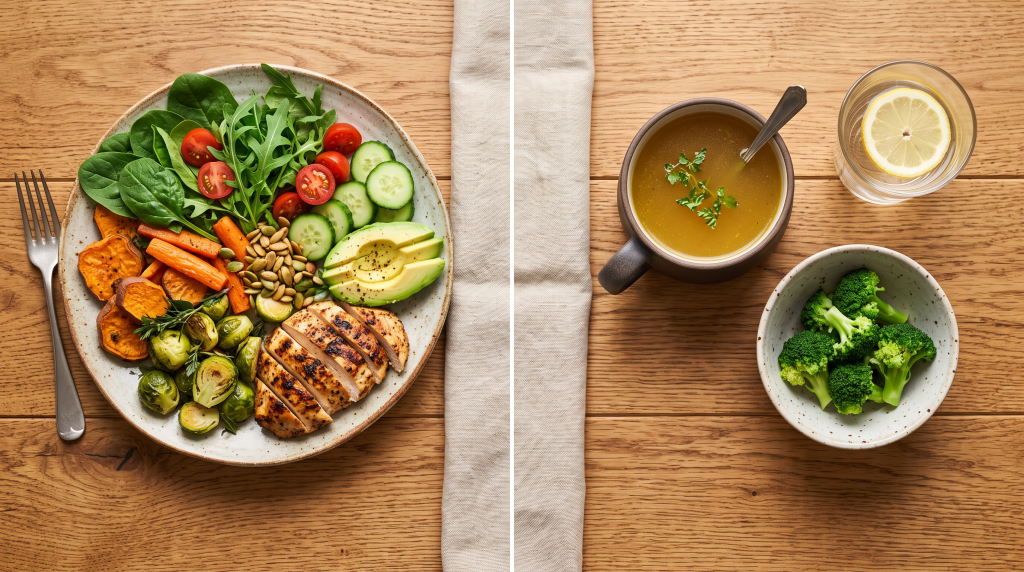
Quick Answer
- The bone broth diet pairs whole-food eating with bone broth, and some versions include optional mini-fasting days.
- The aim is a simple, protein-forward, lower-processed way of eating, with broth for comfort and satiety.
- It may support a calorie-aware routine, but it is not a quick fix, and results vary.
- It is not for everyone. Skip it or check with a professional if you are pregnant, managing a condition, or have a history of disordered eating.
The bone broth diet is one of the best-known ways people use bone broth, and it is worth explaining clearly and honestly. Here I will describe the general idea behind it, how the pieces fit together, what it may realistically offer, and, importantly, who should approach it with caution. As with any structured eating plan, the right framing and a few sensible safeguards matter.
Before getting into the structure, the most important point: this is a general overview, not personalized advice, and a structured diet is not appropriate for everyone. Please read the cautions below, and speak with a qualified professional before starting if you have any health concerns.
The Basic Idea
At its core, the bone broth diet combines a focus on whole, minimally processed foods with the regular inclusion of bone broth, and some versions add occasional mini-fasting days built around broth. The broth provides comfort, protein, and electrolytes that make lighter days more manageable, while the overall emphasis is on simple, nourishing eating rather than processed foods, refined sugar, and alcohol. Think of it as a structure for eating more whole foods, with broth as a supportive thread.
The Role of Bone Broth
Bone broth plays a specific role: it is warm, satisfying for its calories, and provides protein and electrolytes, which helps on days when you are eating more lightly. Sipping a cup can take the edge off hunger and offer a comforting ritual, making a simpler way of eating feel less restrictive. The collagen and amino acids it provides are a bonus. You can read more about what broth offers in our overview of bone broth benefits and what is bone broth good for.
What You Eat
On the eating days, the general emphasis is on whole foods: quality protein, plenty of vegetables, healthy fats, and limited processed foods, refined carbohydrates, sugar, and alcohol. This is simply a sensible, whole-food pattern that many nutrition approaches share. Bone broth is included as a drink or a soup base. The specifics vary between versions of the diet, and the healthiest approach favors balance and variety rather than rigid rules or severe restriction.
The Optional Fasting Component
Some versions of the bone broth diet include occasional mini-fasting days, where you eat very lightly and lean on broth for comfort and electrolytes. If you choose to include these, keep them short and gentle, drink plenty of water, and stop if you feel unwell. Fasting is not suitable for everyone, so this component in particular should be approached carefully and skipped by anyone for whom it is not appropriate. Our guide to a bone broth fast and does bone broth break a fast cover the nuances.
What It May Realistically Offer
Approached sensibly, the bone broth diet may help some people by encouraging whole-food eating, reducing processed foods and sugar, supporting hydration, and offering a simple structure that is easy to follow. Any of these can be genuinely positive. What it will not do is deliver effortless or permanent weight loss; sustainable results come from consistent habits over time, not from any single food or short plan. Results vary considerably from person to person, and the lasting value lies in the habits you build and keep.
Important Cautions
This part matters most. A structured diet with fasting elements is not appropriate for everyone. You should not follow it, or should speak with your doctor first, if you are pregnant or breastfeeding, managing diabetes or blood sugar issues, living with kidney or other medical conditions, taking medications affected by food intake, or underweight. Critically, anyone with a history of disordered eating should avoid restrictive plans and fasting altogether, as they can be harmful; a steady, balanced relationship with food is far healthier. If a plan ever pushes you toward severe restriction or makes you feel unwell, that is a signal to stop.
Making It Sustainable
If the approach suits you, the key to any benefit is sustainability. Favor balance over extremes, do not skip meals to the point of feeling depleted, and focus on the whole-food habits you can keep long after any structured phase ends. The most valuable outcome is not what happens during a few weeks on a plan, but the steadier, more nourishing way of eating you carry forward. Bone broth can remain a pleasant, supportive part of that, and the convenient forms of bone broth make it easy to keep up.
Choosing Your Broth
For variety, rotate your broths and season them well so the routine stays enjoyable. A lighter chicken bone broth is easy for everyday sipping, while a richer beef bone broth is more of a treat, and our guide to how to make bone broth taste better helps keep things interesting. For related approaches, see what is a bone broth cleanse and bone broth for weight loss, and our overview of the bone broth diet.
A Balanced Final Word
The bone broth diet is, at its best, a structure for eating more whole foods with broth as a comforting companion, and for some people that structure is genuinely helpful. The healthiest way to approach it is with balance, realistic expectations, and attention to the cautions above. Skip it if it is not right for you, favor sustainable habits over quick fixes, and remember that a qualified professional is the best person to guide any significant change to how you eat.
The Basic Idea
The bone broth diet pairs nourishing whole foods on most days with broth as a regular, satisfying part of the routine, and includes lighter, broth focused days at intervals. The thinking is that broth offers warmth, protein, and comfort for relatively few calories, which can make a structured eating plan easier to follow. It is best understood as one framework among many, not a magic formula, and it works only as well as the overall balance and consistency behind it.
What a Typical Day Looks Like
On most days, the focus is on quality protein, plenty of vegetables, and healthy fats, with a cup or two of broth worked in as a snack or a warm start to a meal. On lighter days, broth features more prominently alongside gentle whole foods. A mix of chicken bone broth and beef bone broth keeps it varied and satisfying. The aim is steady, sustainable habits rather than extreme restriction.
Keeping It Healthy and Realistic
Any eating plan is healthiest when it is balanced, varied, and sustainable. Make sure you are getting enough overall nourishment, listen to your body, and avoid pushing into restriction that leaves you depleted. Bone broth is a supportive tool here, not a meal replacement, and lasting results come from habits you can keep rather than short bursts. Results vary from person to person, and the scale is only one measure of health.
Who Should Be Cautious
This kind of plan is not right for everyone. If you are pregnant or breastfeeding, managing a medical condition, taking medication, or have any history of disordered eating, please speak with a qualified healthcare professional before starting, and consider whether a gentler everyday approach would serve you better. A professional can help you tailor any plan to your own needs safely. Our piece on bone broth for weight loss discusses the broader, balanced view.
Making It Sustainable
The plans that work are the ones you can actually live with, so the goal is to take what is useful from the bone broth diet and build it into habits you can keep. A satisfying cup of broth as a snack, a focus on quality protein and vegetables, and a gentle, consistent rhythm are all sustainable. Extreme restriction is not. Be kind to yourself, get enough overall nourishment, and measure success by how you feel and function rather than the scale alone. Results vary, and a steady approach you enjoy will always beat a harsh one you abandon.
Frequently Asked Questions
How does the bone broth diet work?
It generally pairs whole-food eating with regular bone broth, and some versions add occasional mini-fasting days built around broth. The aim is simpler, protein-forward eating with broth for comfort and satiety.
Does the bone broth diet help you lose weight?
Some people find the whole-food focus and broth’s satiety helpful, but lasting results come from consistent habits, not a short plan. It is not a quick fix, and results vary considerably.
Is the bone broth diet healthy?
Its emphasis on whole foods over processed ones is sensible for many people, but any plan with fasting elements is not right for everyone. Favor balance, and check with a professional before starting if you have concerns.
Who should not do the bone broth diet?
Skip it, or consult a professional first, if you are pregnant or breastfeeding, managing diabetes, kidney, or other conditions, taking certain medications, underweight, or have a history of disordered eating.
Do I have to fast on the bone broth diet?
Not necessarily. The fasting component is optional and varies between versions. If you include it, keep mini-fasts short and gentle, and skip them if they are not appropriate for you.
